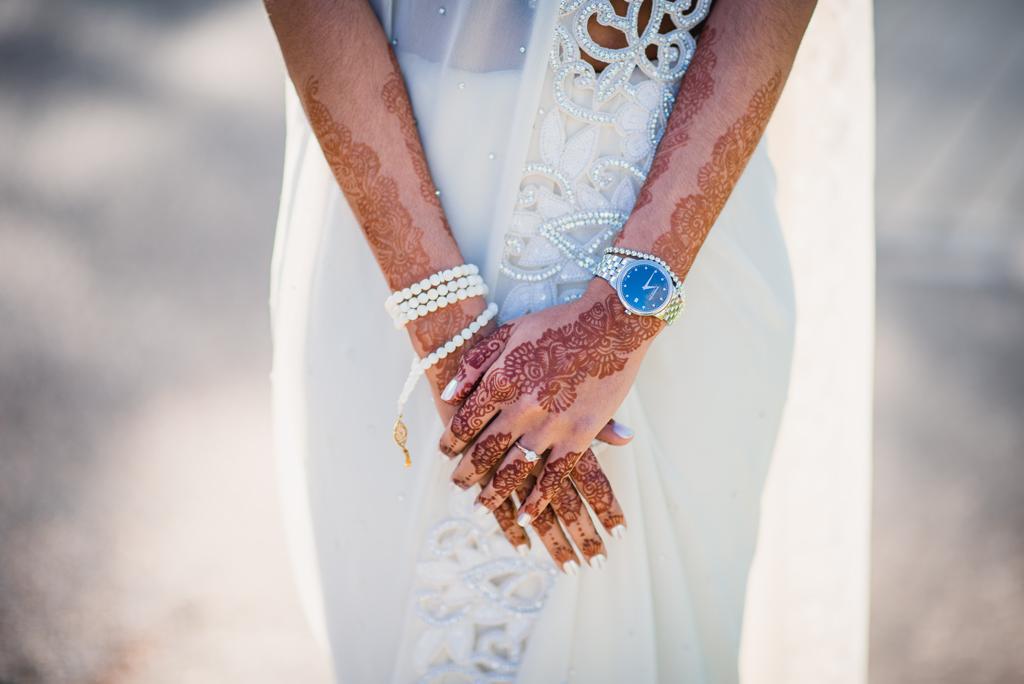
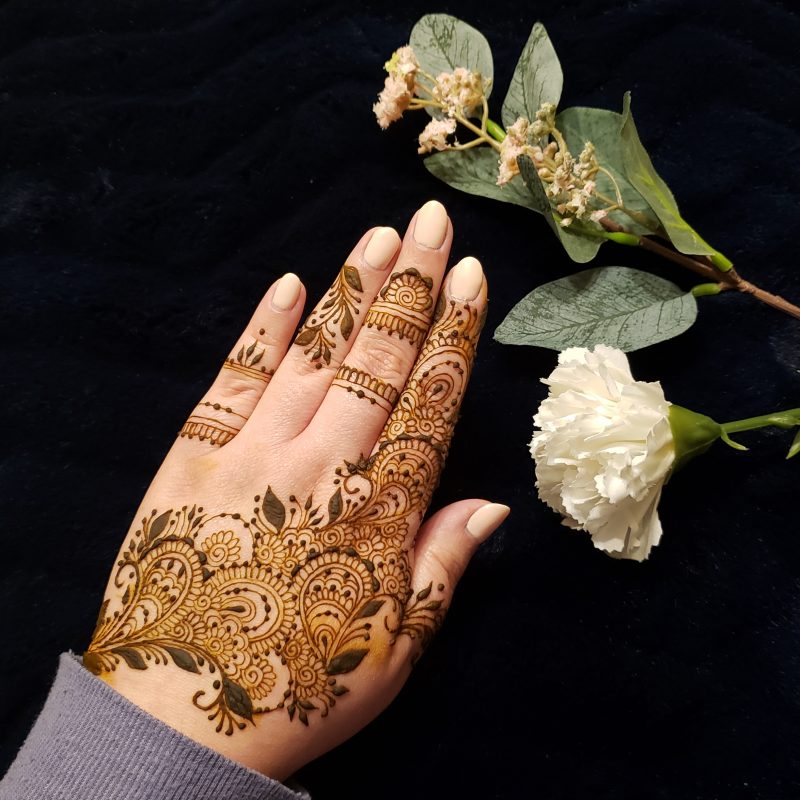
Mehndi aka Henna Story
I remember the first time I ever applied mehndi back in the day. I would watch my mother dip a toothpick in the mehndi container and apply them on our hands. Mehndi in the form of cones was unknown to us at the time. During cultural and religious occasions, we would get small containers of mehndi from our local place of prayer to take home and engage in the traditional ritual of applying mehndi on our hands. I was about five years old when I first started applying mehndi all by myself. My favourite design was to draw a flower in the middle, and five vines leading up to the tip of each finger. It used to take me hours to dip the toothpick in each time to get a precise amount of mehndi that would ensure a perfect design. I have loved both meticulousness and mehndi ever since.
Mehndi is a form of body art and an ancient practice rooted in the history of many communities living across the Middle East, Africa, and the Indian Subcontinent. Hence it is referred to as ‘henna’ in Arabic, and ‘mehndi’ in Hindi, which comes from ancient Sanskrit. Mehndi is commonly used as a form of art to adorn the body, and also as a form of treatment and colour dye for hair and nail health. It is also used as a dye for fabric and textiles!
Mehndi has always been a part of my religious, cultural and communal heritage. Traditionally, we would apply mehndi on our hands and feet during occasions like Eid, Khushiali, weddings, and godh bharais (baby showers), to name a few. In our culture, it is believed that the darker your stain is, the more you are loved! For our families, mehndi is more than just a beauty trend, it is a custom, a tradition, a marker of identity, and a symbolic ritual. It can symbolize many values, such as beauty, love, happiness, hope, luck, protection, and blessings. For many of those who associate directly with this tradition, the process of applying mehndi and designing mehndi art work is a spiritual experience, and a form of artistic and human expression. I encourage everyone who engages in this practice to learn about its cultural and religious significance.